
One of the words we've heard most in recent days is “metaverse”. Although there have been sparks in this field for a long time, Facebook renaming itself Meta suddenly put the word on everyone's lips. So what is the metaverse, where did it come from, and will it really change our lives?
What is the metaverse?
“Metaverse” combines “meta” (beyond) and “universe”. Put simply, it's the next stage of the internet: instead of an internet we look at on a screen, an internet we “step into”.
In this virtual world, people meet, work, play games, shop and go to concerts as avatars. All of this happens in three-dimensional space, in real time and across connected platforms.
Where did it come from?
The term was first used by the writer Neal Stephenson in his 1992 novel “Snow Crash”. In the years that followed, the idea came to life in different forms:
- Second Life (2003) — the first famous platform where people lived a virtual life and bought and sold land;
- Minecraft and Roblox — games where millions of children build worlds together;
- Fortnite — in 2020, tens of millions of people watched Travis Scott's in-game virtual concert;
- Decentraland and The Sandbox — platforms selling virtual land on the blockchain.
So the metaverse isn't a new idea. What's new is that big companies have started investing billions of dollars in it.
Why did Facebook change its name?
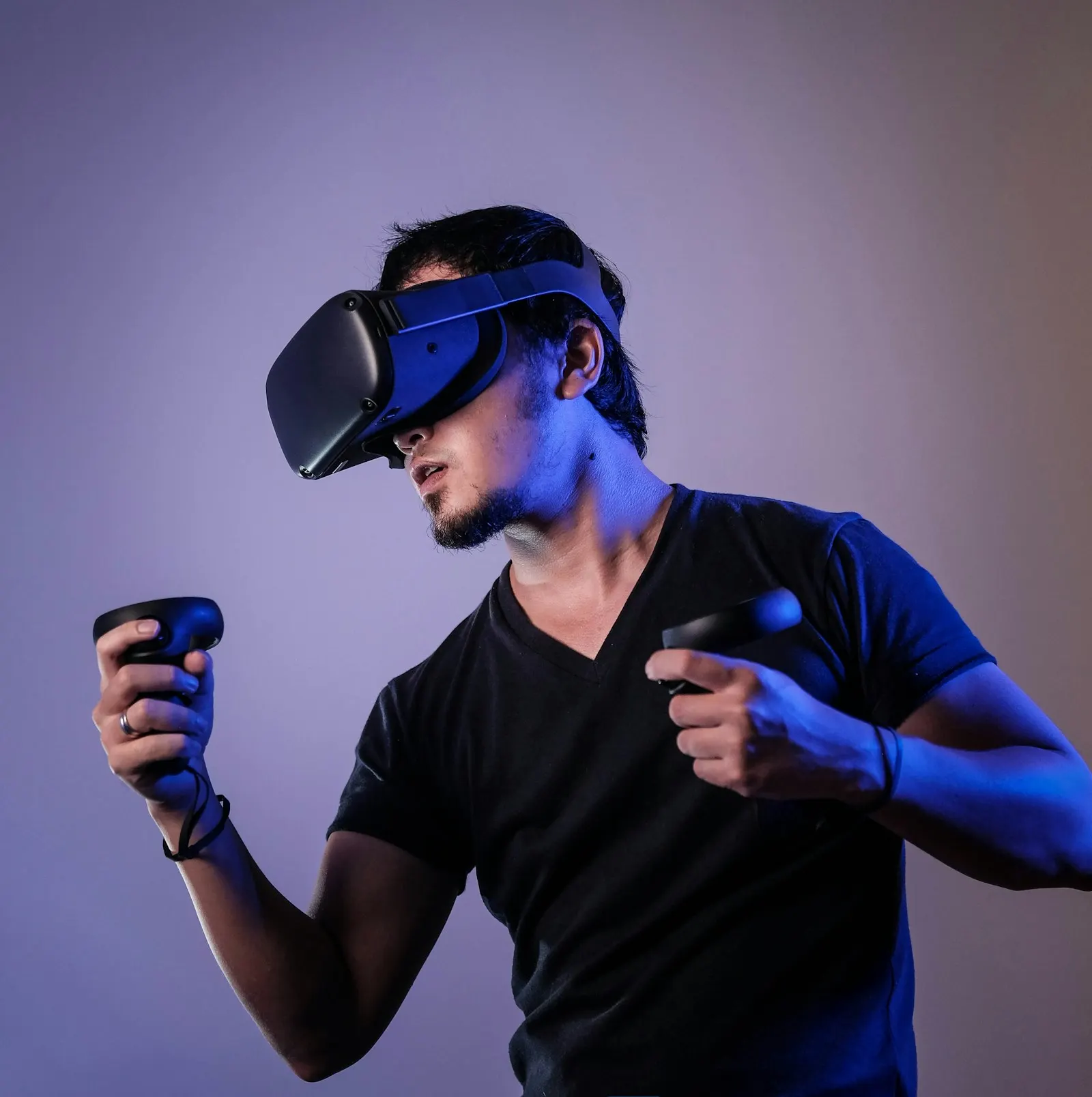
On 28 October 2021, Mark Zuckerberg announced the company's new name: Meta. The goal is clear: to leave behind the image of a “social network company” and build the platform of the future. The company has been making Oculus virtual reality headsets for several years now, and in its view the metaverse will be the next “smartphone moment”.
Let's not forget one thing either: in recent years Facebook has been remembered for its data security scandals — the story of WhatsApp's data sharing is only one of them. The name change is also seen as an attempt to step out of that shadow.
What technologies does the metaverse rely on?
- VR (virtual reality) — entering a fully virtual environment with a headset;
- AR (augmented reality) — adding a digital layer on top of the real world;
- 3D graphics and game engines — such as Unreal Engine and Unity;
- Blockchain and NFTs — ownership rights to virtual items;
- Fast internet — so thousands of people can be in the same virtual space in real time.
How could it change the way we live?
Work. Instead of video calls, a virtual office: you sit at the same table as your colleagues' avatars and write on the board together.
Education. Walking through ancient Rome in a history lesson, “stepping inside” a human heart in biology — learning will be more alive.
Shopping. Trying clothes on your avatar before buying them, placing furniture in your home to see how it looks.
Entertainment. “Going” to a concert on the other side of the world without leaving home.
The economy. Virtual items, clothes and land are already bought and sold for real money. New professions are appearing: 3D designer, virtual architect, avatar stylist.
The risks are many too
- Privacy. Virtual reality headsets can track eye movements, voice, even your room. That means far more data than today's social networks.
- Addiction. Escaping the real world gets even easier.
- Monopoly. If a few giant companies run the metaverse, they'll write the rules too.
- Price. Quality VR equipment is still not affordable for everyone.
And what about us?
For Azerbaijan, this is both a risk and an opportunity. 3D design, game development and VR/AR apps are still underdeveloped here — which means there's less competition too. A young person who starts learning these fields today could be a sought-after specialist in a few years.
Looking back from 2026
I wrote this post in November 2021. The years since have shown that the metaverse didn't arrive as fast as expected. Meta spent tens of billions of dollars on its virtual reality division, and Apple put Vision Pro on sale in 2024, but the mass shift hasn't happened yet. The tech world's attention has turned to artificial intelligence instead.
But the idea itself didn't die: virtual meetings, AR filters and the internal economies of game worlds are already part of our daily lives. The metaverse doesn't arrive overnight — it comes step by step, often without even being called by its name.